
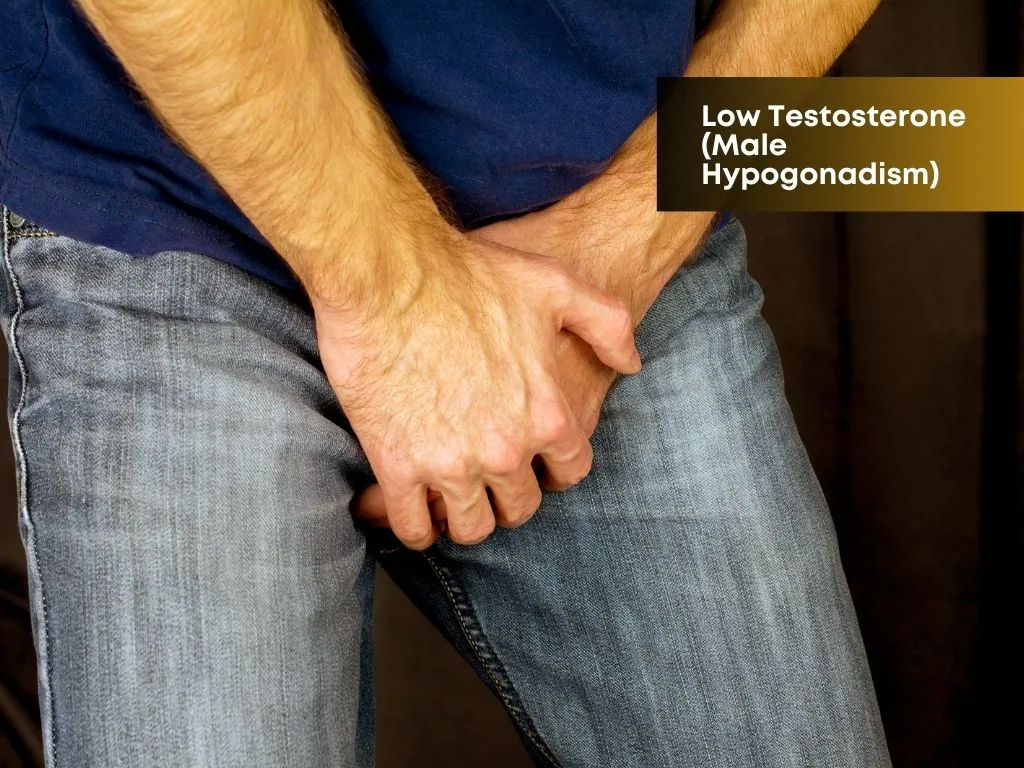
Low Testosterone (Male Hypogonadism)
-
 Nalamaree Team
- 22 September 2025
Overview
Testosterone naturally declines with age, but pathologically low levels can affect mental, physical, and sexual health.
Causes
- Aging
- Testicular injury or surgery
- Pituitary gland dysfunction
- Obesity, metabolic syndrome
- Alcohol, anabolic steroid misuse
Symptoms
- Fatigue, low energy
- Reduced libido or ED
- Depression or low mood
- Loss of muscle, increased fat
- Decreased bone density
Treatment: Modern Medicine
- Diagnosis: Early morning Total & Free Testosterone levels, LH/FSH, SHBG
- Treatment:
- Testosterone replacement therapy (gel, injection, patch)
- Clomiphene citrate (for fertility-preserving approach)
- Treat underlying conditions (obesity, diabetes)
Treatment: Traditional Medicine
- Ayurveda: Ashwagandha, Shilajit, Kapikacchu
- Siddha: Veliparuthi, Nilappanai
- Unani: Majoon-e-Mughalliz, Habbe Mumsik
- TCM: Yin Yang Huo (Horny goat weed), Ginseng, acupuncture
- Homeopathy: Agnus castus, Lycopodium, Nuphar luteum
- Nutraceuticals: Zinc, Magnesium, Vitamin D, D-Aspartic Acid, Fenugreek
Caution
- Testosterone therapy may affect fertility
- Monitor prostate and heart health during therapy
Prevention
- Maintain healthy weight
- Sleep 7–8 hrs/day
- Manage stress and avoid substance abuse



.jpg.webp)